Self-control isn't willpower. It's habits
Research links self-control with useful habits and less resistance. Choose a repeatable routine, decide ahead, and avoid a fight where you can.
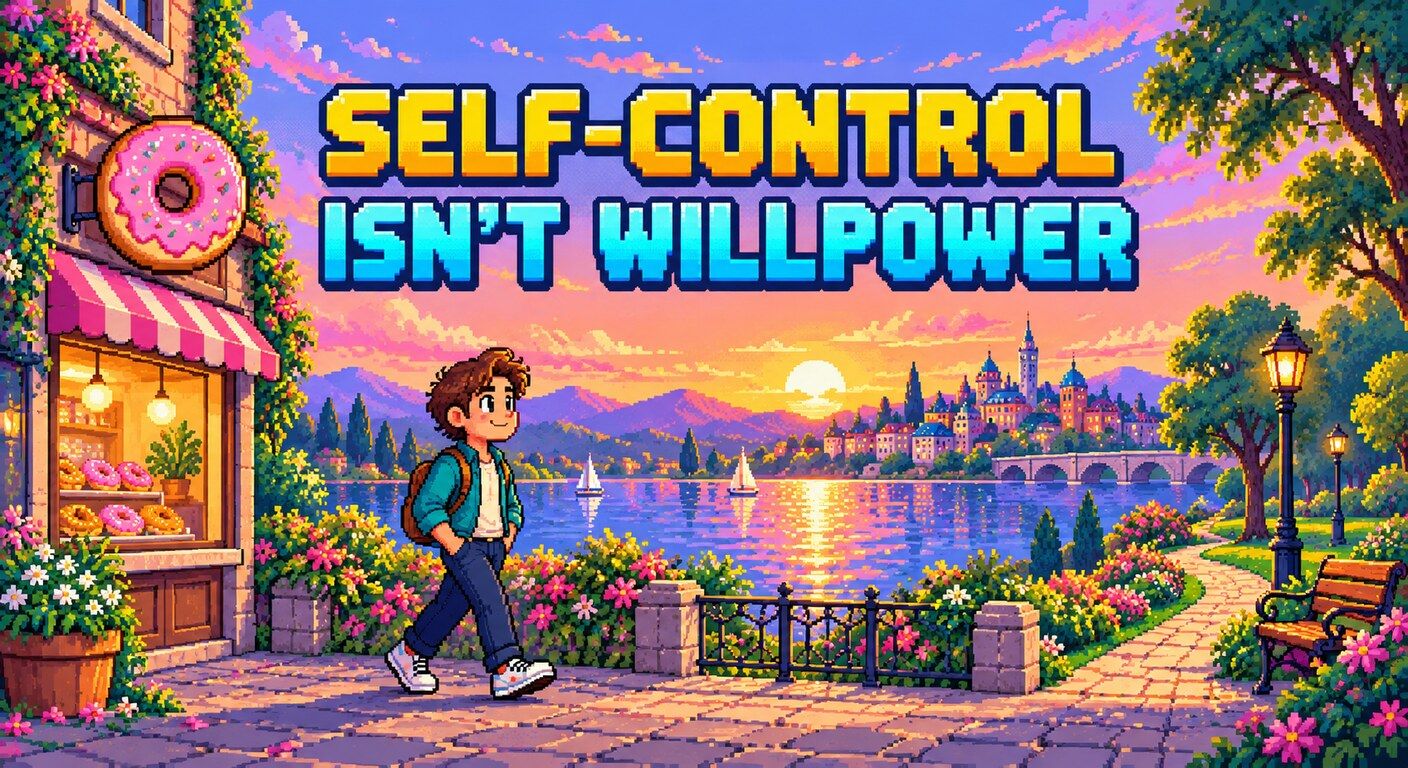
You can judge a day by how hard you fought temptation. Or you can look at the routines and decisions that shaped what you did. This episode gives you a reason to pay attention to the second question.
People with strong self-control do not necessarily spend more time resisting in the moment. Useful habits help explain their success. Try choosing a repeatable action and deciding how you will approach it before the difficult moment arrives.
What self-control looked like in the studies
Across six studies involving 2,274 people, Galla and Duckworth found that beneficial habits helped explain the relationship between self-control and positive outcomes, with less resistance in the moment.
In another study, 205 adults received beeper check-ins for a week. Those higher in self-control reported weaker temptations and less fighting against them. The finding points towards looking at your routines as well as your effort.
The idea that willpower “runs out” also needs care. A replication involving 23 labs and 2,141 people found an effect close to zero for the task tested. That challenges the simple battery account without establishing that effort never matters.
Try the four rules from the video with one habit you want to practise.
1. Avoid the fight where you can
Choose one tempting situation you can arrange differently. Try skipping the shopping aisle where you keep picking something you meant to leave behind. For reading, put your phone in another room before you sit down.
Decide on the arrangement in advance. Write where the phone will stay or which part of the shop you intend to visit. Choose a setup you can actually use during the next attempt, then try it in that specific situation.
2. Build the routine
Pick the same cue and action to return to each day. For example, try a short stretch after closing your laptop or a page of reading after breakfast. Name the moment and the action together.
Prepare what you need in the place you chose. Leave the book beside the chair or choose the space for your stretch. At the next cue, practise the action you planned. Keep your attention on that repetition as you work on the routine.
3. Decide ahead
Choose what you will do before the moment arrives. If you want to walk after work, decide where you will begin and prepare your shoes. If you want to write, choose the notebook and the first small task.
Give yourself a plan you can read back. “After breakfast, I will write one line at the table” tells you where to start. Check that the sentence fits tomorrow, and finish the decisions you still need to make for that attempt.
4. Keep it repeatable
Choose a version small enough for a difficult day. Try a line, a page, or a short stretch. Let that version count as the action you planned, even when you decide to continue.
Look at your busiest day and ask what you are willing to attempt then. Use that answer to choose the starting version. Write it into the plan alongside the cue, so you have a clear action to return to when your day feels full.
Make one decision now
Choose a habit and decide how you will set up the next attempt. Prepare the cue, the small action, and anything you need to put in place beforehand. Give yourself a routine to practise and a concrete next step you can take.
Related reading: Willpower vs. Habit: Why Automation Beats Force.
Sources
-
Galla, B. M., & Duckworth, A. L. (2015). More than resisting temptation: Beneficial habits mediate the relationship between self-control and positive life outcomes. Journal of Personality and Social Psychology, 109(3), 508–525.
-
Hofmann, W., Baumeister, R. F., Förster, G., & Vohs, K. D. (2012). Everyday temptations: An experience sampling study of desire, conflict, and self-control. Journal of Personality and Social Psychology, 102(6), 1318–1335.
-
Hagger, M. S., Chatzisarantis, N. L. D., Alberts, H., et al. (2016). A Multilab Preregistered Replication of the Ego-Depletion Effect. Perspectives on Psychological Science, 11(4), 546–573.

Make it a habit with Habit Pixel
Color a pixel for every check-in and watch your consistency grow. Free on iPhone, iPad and Android.


Scan to downloadOpens the App Store or Google Play