When's the best time to walk? After a meal
A short walk after eating lowered the blood-sugar rise in studies. Here is what the research shows, what it does not, and how to turn it into a habit.
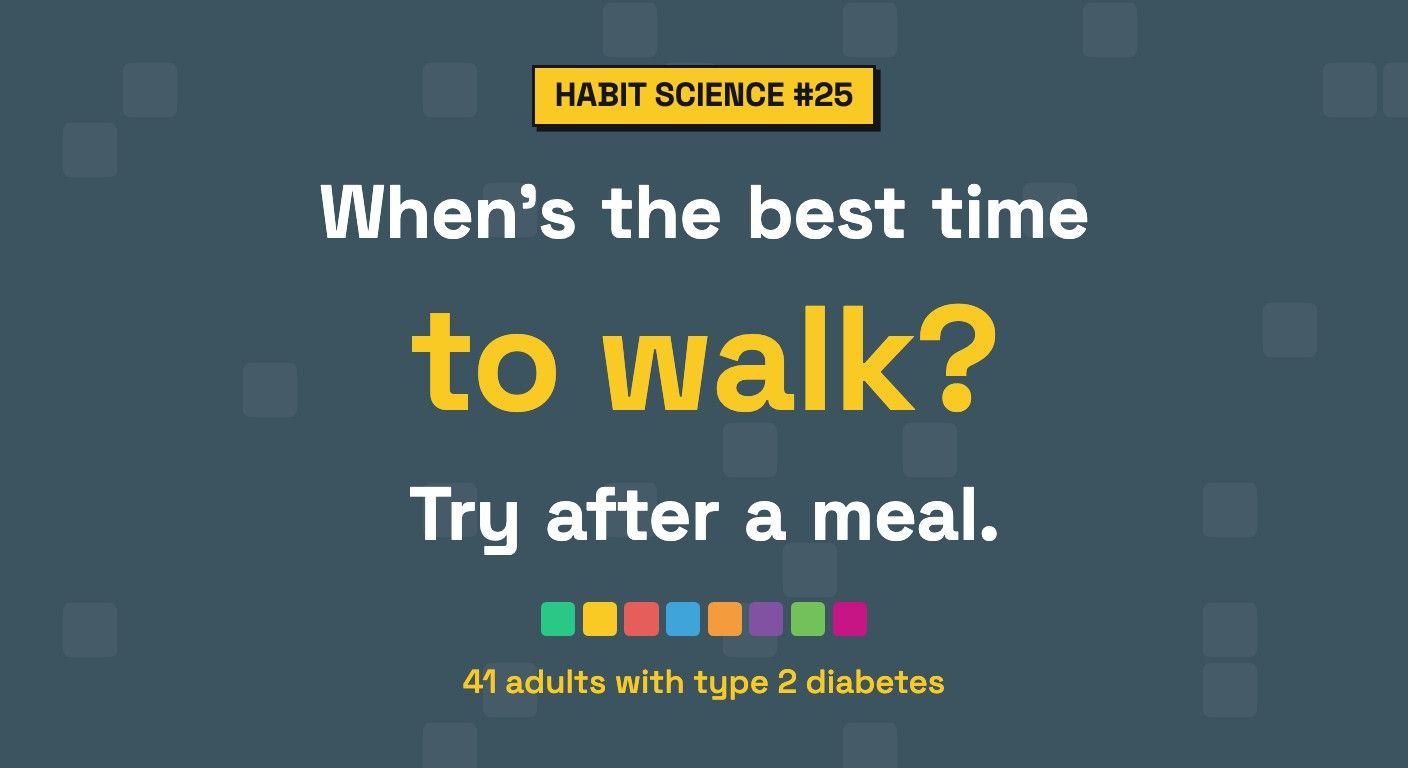
Most advice about walking is about how much: how many minutes, how many steps. There is a smaller question that gets less attention. When in the day does a walk do the most good? For blood sugar, a few studies point to the stretch after you eat.
The evidence here is about blood sugar, not weight loss, and several of the studies are small. Treat it as a useful habit to try rather than a cure for anything.
What the studies found
Reynolds and colleagues ran a randomised crossover trial with 41 adults who had type 2 diabetes (average age 60). For two weeks each, with a 30-day gap between, the same people were given two kinds of advice: walk for 30 minutes a day, or walk for 10 minutes after each main meal. Both met the usual activity guidelines. Sensors tracked their glucose, and the researchers measured how far it rose in the three hours after meals.
Blood sugar after meals was about 12% lower in the weeks of after-meal walking than in the weeks of one daily walk. The difference was biggest after the evening meal, about 22% lower. The authors suggest that activity guidance should say when to move, especially after carbohydrate-heavy meals.
A smaller trial found something similar in older adults. DiPietro and colleagues studied 10 inactive adults aged 60 or older whose fasting blood sugar was above normal. In a controlled lab stay, three 15-minute moderate-pace walks, each starting 30 minutes after a meal, improved 24-hour glucose control. They also lowered blood sugar in the three hours after dinner by more than one 45-minute walk in the morning or afternoon did. With only 10 people, that is early evidence.
Then there is the wider picture. Buffey and colleagues pooled seven one-day lab studies that broke up long periods of sitting. Short, light walking breaks lowered blood sugar after eating more than sitting did, and walking beat standing. Standing breaks also helped, just less. Most of the people in those studies were overweight or had obesity, and none had type 2 diabetes. The studies differed a lot from each other, and they only tested a single day.
What this does not tell us
These studies measured blood sugar after meals. They did not measure weight loss, and none of them followed people for years. The two-week and one-day designs show a short-term effect, not proof that walking after meals prevents disease. If you have diabetes or take glucose-lowering medication, ask your doctor or nurse before changing your routine.
Here are the four rules from the video.
1. Walk for 10 minutes
You do not need a long outing. The main trial used 10 minutes after each main meal, which is short enough to fit around a normal day. A lap of the block, a loop of the car park or a stroll to a nearby shop all count.
Pick a route you can finish without thinking about it. The shorter and easier the walk is, the more likely it is to happen tonight.
2. Start about 30 minutes after eating
The small DiPietro trial started each walk 30 minutes after finishing the meal, so that is a sensible time to aim for. Eat, clear up, then head out. If a different gap suits your day, a walk is still better than none; this is just the timing one study used.
3. Start with dinner
If you only add one walk, make it the one after your evening meal. That was where the biggest drop showed up in the Reynolds trial. It is also an easy slot to anchor: dinner happens at roughly the same time most days, and a walk fits neatly after it.
Write it as a plan: “After I finish dinner, I put on my shoes and walk for 10 minutes.” Then add lunch if the first one sticks.
4. No walk? Stand up
Some evenings you cannot get outside. In the pooled lab studies, standing breaks lowered blood sugar after eating compared with sitting, although less than walking did. So if a walk is not possible, get off the sofa for a few minutes instead of staying put. Treat it as a fallback, not a replacement.
Pick your first meal
Choose one meal, one 10-minute route and one cue. Tonight, do it once. If you already count steps, these minutes add to your daily total, so nothing here competes with your other goals.
Related reading: You don’t need 10,000 steps a day.
Sources
-
Reynolds, A. N., Mann, J. I., Williams, S., & Venn, B. J. (2016). Advice to walk after meals is more effective for lowering postprandial glycaemia in type 2 diabetes mellitus than advice that does not specify timing: a randomised crossover study. Diabetologia, 59(12), 2572–2578.
-
Buffey, A. J., Herring, M. P., Langley, C. K., Donnelly, A. E., & Carson, B. P. (2022). The acute effects of interrupting prolonged sitting time in adults with standing and light-intensity walking on biomarkers of cardiometabolic health in adults: A systematic review and meta-analysis. Sports Medicine, 52(8), 1765–1787.
-
DiPietro, L., Gribok, A., Stevens, M. S., Hamm, L. F., & Rumpler, W. (2013). Three 15-min bouts of moderate postmeal walking significantly improves 24-h glycemic control in older people at risk for impaired glucose tolerance. Diabetes Care, 36(10), 3262–3268.

Make it a habit with Habit Pixel
Color a pixel for every check-in and watch your consistency grow. Free on iPhone, iPad and Android.


Scan to downloadOpens the App Store or Google Play