Want to eat less junk? Move it 10 inches
Small changes in reach affected food selection at a salad bar. Try adding a step to an unwanted habit and keeping useful things within reach.
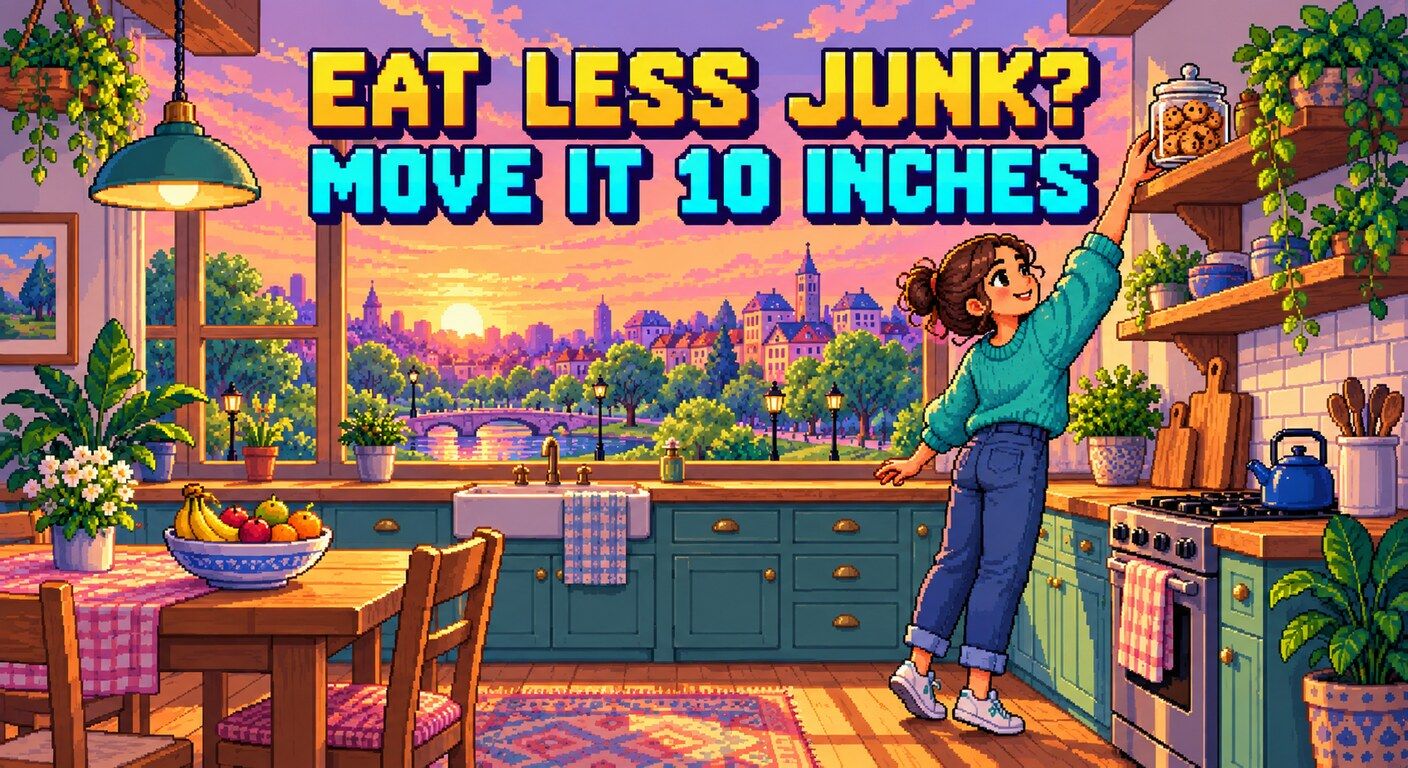
Look at the snack you keep reaching for. Where is it? Try moving it to the back of the cupboard or a higher shelf. Give yourself an extra step between noticing it and taking it.
This episode is about friction: how easy something is to reach or do. The research starts with small changes at a salad bar. You can use the idea to choose a different arrangement for one habit in your own day.
A small change in reach
At a hospital salad bar, moving foods about 10 inches farther back reduced the amount taken by 13.4% on average. A repeat study found an 8.9% reduction. Replacing a serving spoon with tongs led to 16.5% less being taken.
These results concern food selection in that setting, rather than a promised change in your diet or weight. A Cochrane review also found less food consumption when food was farther away, across 12 studies.
Use those findings to look for a modest obstacle you can add to an unwanted habit. Then try the reverse for something you want to do more often.
1. Put snacks out of reach
Choose a snack you tend to take without much thought and give it a different place. Try a higher shelf or the back of the cupboard. Use a location that requires a deliberate step to get it.
Make one change you can describe clearly: “The biscuits go at the back of the cupboard.” Try that arrangement during your usual routine. When you review it, ask whether the new position changed how you approached the choice. Keep or adjust the setup based on what you notice.
2. Add one fiddly step
You can try the idea beyond food. If you keep opening an app when you meant to do something else, log out after each use. Make the next visit require signing in again.
Pick the extra step before the next session, and decide when you will put it back in place. For example, finish using the app, then log out. This is a practical adaptation of the friction idea. Try it with the particular action you want to interrupt and see whether you want to keep the rule.
3. Change what you stock
If there is a snack you want to stop picking automatically, try leaving it off your next shopping list. Choose that item while planning the shop, then follow the list you wrote.
Keep the experiment specific. You could decide which snack you want to stop keeping beside your desk or in the cupboard. Write down the change before the next shop. You are choosing what will be available in the place where the repeated choice usually happens.
4. Keep useful things within reach
Reverse the arrangement for an action you want to repeat. Put your water bottle on the desk, your book beside the chair, or your walking shoes where you prepare to leave.
Choose the object and the place together. If you want to read after work, leave the book where you plan to sit. After using it, return it to that spot for the next attempt. Give the habit you want a setup you are willing to maintain.
Move one thing tonight
Choose one unwanted habit and add a step to it, or choose one useful habit and prepare what you need within reach. Try that single change in your next routine. Notice what happens before deciding whether to rearrange anything else.
Related reading: Reduce Friction, Add Friction – The Path-of-Least-Resistance Blueprint.
Sources
-
Rozin, P., Scott, S., Dingley, M., Urbanek, J. K., Jiang, H., & Kaltenbach, M. (2011). Nudge to nobesity I: Minor changes in accessibility decrease food intake. Judgment and Decision Making, 6(4), 323–332.
-
Hollands, G. J., Carter, P., Anwer, S., King, S. E., Jebb, S. A., Ogilvie, D., Shemilt, I., Higgins, J. P. T., & Marteau, T. M. (2019). Altering the availability or proximity of food, alcohol, and tobacco products to change their selection and consumption. Cochrane Database of Systematic Reviews, 9, CD012573.

Make it a habit with Habit Pixel
Color a pixel for every check-in and watch your consistency grow. Free on iPhone, iPad and Android.


Scan to downloadOpens the App Store or Google Play